Monday, September 16, 2013

Molly Fish

Molly Fish:-

Mollenesia or Molly fish are an adaptable fish and live well within the fish community.  Though they prefer a little salt with their water, they can live in fresh water or salt water aquariums.  Molly fish can be found normally where fresh water meets salt water in various regions of the world.

Life Expectancy:-

Short fin Molly fish live on average 4 to 5 years.  They can grow to five inches if their environment is just right.  They need an aquarium of at least 15 to 20 gallons.  But don’t cramp them.  It is far better to have one male and maybe two or three females than a lot of fish.  More than one male will cause fighting, especially if they are both colorful.  The “alpha” male is determined by the one with the prettiest colors, so getting two males that are similar in color is not going to be good for one of the males.

Water and Lights:-

So now you know what size tank and that you need to add a little salt, how about the water’s temperature?  Most authorities say to keep the tank between 75° to 80° Fahrenheit (24° to 27° Celsius).  Since Molly Fish like a little salt with their water, by adding ½ teaspoon of marine aquarium salt to every gallon of water, you will make your Molly fish very happy.

Keeping the aquarium light on or turning it off?  I suppose that will be your choice.  I just have to think that in the wild, the Molly’s can’t turn the sun on or off and they manage quite well.

Food:-

Molly fish thrive on vegetable flake food combined with either live or dried blackworms or bloodworms.  They also like their vegetables!  Not to worry, they will eat the algae on the sides of the aquarium to get their recommended daily allowance.  However, if there aren’t a lot of algae for them, then you will need to subsidize their diet.  You can do this with either a vegetable based flake or you can simply boil some peas, spinach or cucumber (no seasoning please!), smash them up until it is a creamy texture and drop in tiny amounts (no more than the size of a pea).

Roommates:-

Short fin Molly fish live well with species that are not too flamboyant.  Authorities’ say they live well with Angel fish, however, I have found that the Molly seems intrigued (or maybe jealous) with the flowing tail of the Angel fish.  If you place an Angel fish in the tank, you stand a chance that the Molly will nip at its fins until it causes an infection on the Angel fish.  However, Molly fish live harmoniously with larger Tetras such as Silver Tips and Black Skirts.  They also are good with Swordtails, Platy fish, and Catfish.  They do get along with Plecos fish, but, if you add a Plecos fish, place only one.  These guys don’t like competition.  Since they also like their algae, they may not leave very much for the Molly fish to eat.

Giving Birth:-

Molly fish do not lay eggs.  Instead, the “fry” grows inside the mother until they are large enough for her to give birth.  A few days before you suspect that she is will give birth you need to separate her from the other fish in the aquarium.  There are clear “birthing” bins that you can place her in.  Make sure you give her vegetation in the bin with her.  The bin sits inside the same tank, with the same water, but it keeps the other fish from dining on her newborns. 
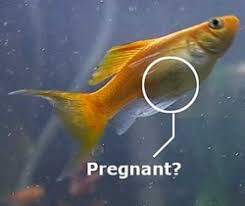
A female Molly fish can give birth from 10 to 140 little Molly Fish (and sometimes more).  Once she is finished giving birth, you need to immediately take her out of the birthing bin and place her back in the general population, leaving the little ones safe in the bin to grow and flourish.  

Monday, September 9, 2013

General Care of Angelfish

Aquarium Size:-

  The actual aquarium size is relatively unimportant. However, the number of angelfish per gallon is critical. This figure varies depending on several factors. Obviously, size has a lot to do with carrying capacity. Other variables that affect this include, pH, temperature, feeding practices, water changing volume, water changing frequency, strain of angelfish being kept and the overall quality of angelfish you desire to raise or maintain. Keep in mind, the number of angelfish per gallon a tank can handle, will vary immensely from one situation to another. The following would be a very general guideline.
  • Nickel size bodies 1 angelfish per gallon
  • Quarter size bodies 1 angelfish per 2 gallons
  • Silver dollar size bodies 1 angelfish per 3 gallons
  • Stock ready to be paired  1 angelfish per 5 gallons
  • Full grown breeding pair 20 gallon tall

Aquarium Filter:- 


Good biological filtration can be easily obtained a number of ways. Angelfish body shapes are not designed for efficient swimming, therefore gentle aquarium filtration is preferred. Lots of water movement will stress them somewhat and cause slower growth due to the increased energy expended to swim against a current. Angels Plus Sponge filters are ideal for fish hatchery situations, where expense is a concern. In show tanks, undergravel filters works well. In a densely populated tank, a whole-tank filter is a very effective option. A very effective secondary filter that will not clog is a fluidized bed filter. In general, the limiting factor for angelfish carrying capacity is not biological filtration. It is dissolved organics and high bacterial loads that develop from keeping too many fish in a tank, overfeeding or changing too little water. Large, frequent water changes are the easiest way to lower these dissolved organic and bacterial levels. Sophisticated systems will sometimes incorporate the use of ozone, foam fractionation and U.V. filters to accomplish the lowering of these organic and bacterial loads, but most of us will rely upon water changes to accomplish this important facet of angelfish care.

Aquarium Temperature: -


Angelfish have a tolerance to a wide range of aquarium temperatures, but immune system response is best at higher temperatures. Therefore, if your fish husbandry is less than ideal, you will have more problems at lower temperatures. 80° F is a good start for a hatchery situation. Mid to upper seventies is fine for show tanks. As a cold blooded animal, angelfish will live longer at lower temps. Higher temperatures will promote faster growth, more frequent breeding, better immune system response and shorter life spans.

Feeding Angelfish:-


 Feeding is more of an art, than a science. No one can tell you exactly how much food to put in an aquarium. The ideal amount will change everyday as the angelfish grow, and will be different with varying temperature, pH, maintenance schedules and frequency of feedings. Good observation is the key. Overfeeding angelfish is worse than underfeeding. Feed a variety of high quality foods and observe the aquarium and the angelfish closely when feeding. If you want to feed a superior fish food, try making your own paste fish food. We have a great fish paste food recipe.

Friday, September 6, 2013

Mystery fish

KARACHI: A mystery ‘fish’ was found on Clifton beach on Monday, drawing hundreds of eager onlookers.
The dead fish-like creature was found early morning during a low tide by locals, who alerted local police due to the strange nature of the carcass.
Security officials cordoned off the area, but a large crowd gathered to see the fish, creating a carnival-like atmosphere on the beach front.
“This fish is amazing. It has no face…where does it eat from?” asked Allah Ditta, a local resident.
Others looked upon the four-eyed fish creature as a bad omen for the city, or perhaps Pakistan. Some citizens said the fish was a sign that the upcoming elections would be delayed, or massive rigging would take place — at least in the locale the fish creature was found.
Former Head of the Ministry of Local Fisheries and Aquatic Exploration, Azaad Muqam said the fish was likely the result of a mutation. He dismissed all rumours of the fish creature being a bad omen.
“A fish with four eyes and no mouth is not going to impact the elections…we are working hard towards free and fair polls, and if anything, extra eyes should be seen as a sign of greater scrutiny and transparency at the polls,” Muqam said in a media briefing.
Local media report the fish’s carcass is likely to be on display for the rest of the day as large crowds have gathered to see the new local attraction. It is also reported that the fish-creature may be preserved and displayed next to the carcass of the whale shark at the Pakistan Museum of Natural History.

Monday, September 2, 2013

Introducing a new fish

Getting Your New Fish into Their New Home Safely:

1.    Float the plastic bag containing the new fish in the aquarium unopened between 10-20 minutes.

2.   When introducing aggressive fish, you might want to use this time to re-arrange the decorations in your tank a little to break up territories of fish you already have which helps reduce the stress of the newcomer of being harassed by existing fish.


3.    Open the bag and scoop an equal amount of water from the tank into the bag and leave sitting for another 10-20 minutes. In case of introducing a sensitive species, you probably want to do a third amount of the water in the bag twice in the duration of 10-20 minutes.

4.    Once very well acclimatized, your fish are now ready to be introduced into their new home. If introducing a much smaller fish into a crowd of larger fish, feeding your existing fish to one side while the new fish are introduced to the other side will help to get the newcomer settle in.


5.    Now sit back and carefully watch how your fish are treating the newcomer.