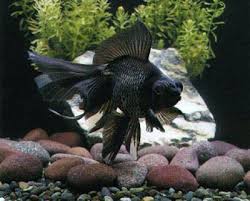
 The Black Moor goldfish is a telescope-eyed variety
of goldfish that, like most other fancy goldfish, is the result of
generations upon generations of selective breeding.
The Black Moor goldfish is a telescope-eyed variety
of goldfish that, like most other fancy goldfish, is the result of
generations upon generations of selective breeding.The Black Moor has a distinctly velvety black, rounded body with long flowing fins and protruding eyes.
Black Moor temperament and care:-
Black Moors are one of the more hardy varieties among the fancier breeds of goldfish and are a good option for the novice goldfish enthusiast. However, their eccentric physical characteristics do call for some special considerations.The Black Moor’s long, flowing fins are also known to attract the unwanted attentions of common goldfish and comets, which leaves them vulnerable to nipping and bullying. Great care should also be taken when aquascaping and decorating an aquarium with Black Moors. Their protruding eyes are extremely delicate and prone to injury, and any sharp objects or plants with jagged edges should be avoided in the Black Moor aquarium.
 Breeding Black Moor goldfish:-
As with all goldfish, Black Moors can be induced to spawn with proper feeding and a sudden change in water temperature.
This is done to mimic the conditions of spring, which is when natural
spawning occurs with freshwater fish. As with other goldfish, the Black
Moor will readily devour its eggs and fry. So, the serious breeder
should use spawning mats or a heavily planted aquarium to provide hiding
space for the fry, or remove the parents as soon as the eggs are laid
and fertilized.

No comments:
Post a Comment